How Much Does It Cost to Rewire an Older Home in Maine?
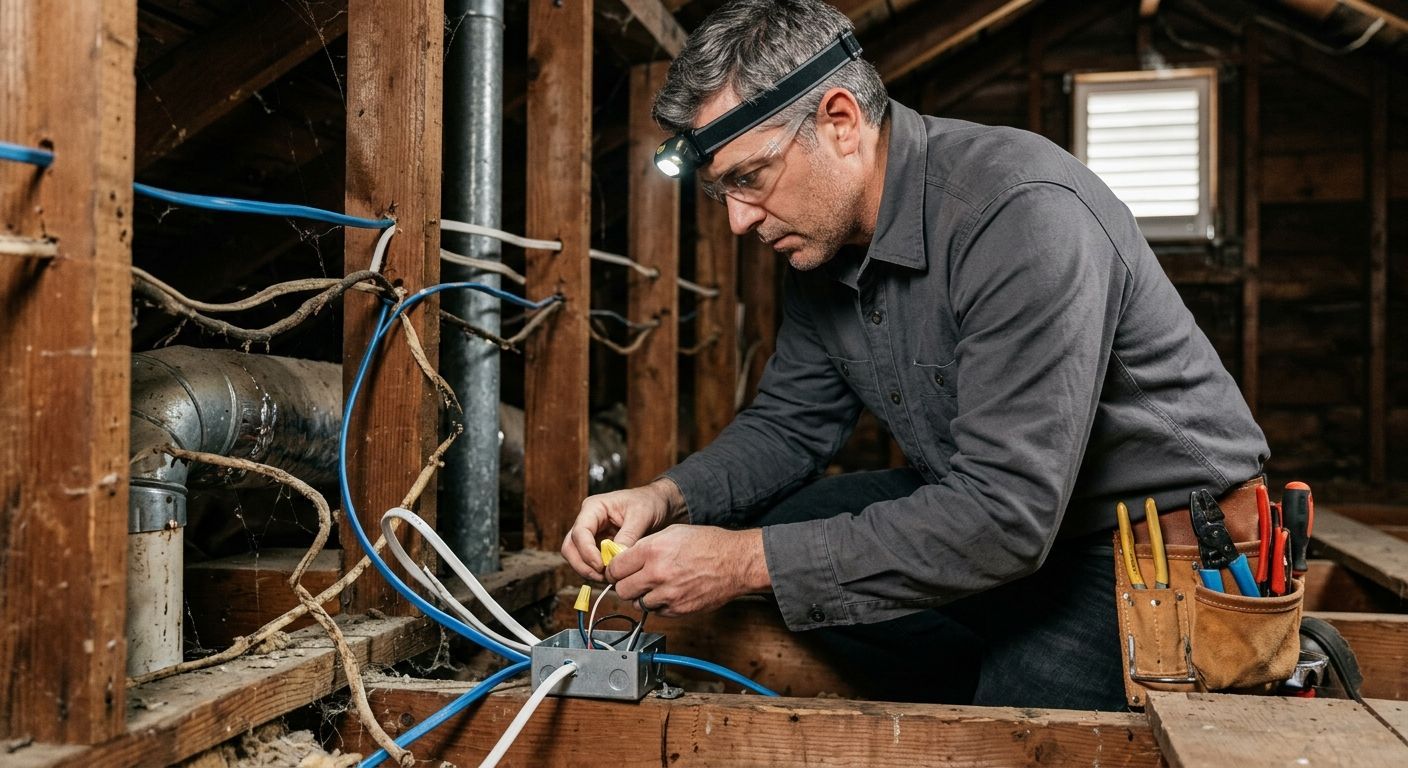
The cost to rewire an older home in Maine depends on the home's size, accessibility, existing wiring, electrical panel, number of circuits, required repairs, and the extent of the project. Because older houses can vary dramatically, an on-site electrical evaluation is the best way to get an accurate estimate. A small, accessible project may be very different from rewiring an entire multi-story home with finished walls and outdated electrical equipment.
For homeowners in Fort Fairfield and surrounding Northern Maine communities, AWM Electric LLC provides professional home wiring and rewiring services tailored to the condition and electrical needs of the property.
Why Is It Difficult to Give One Price for Rewiring a House?
Homeowners searching for the average cost to rewire a house often encounter broad national price ranges online. Those numbers can be useful for understanding that rewiring is a significant home improvement, but they should not be treated as a reliable estimate for a specific property in Northern Maine.
Two homes with the same square footage can require very different amounts of electrical work.
One house may have relatively accessible wiring, a suitable electrical panel, straightforward framing, and a simple layout. Another house of the same size may have multiple additions, finished walls, outdated wiring methods, limited access, an undersized panel, and decades of electrical modifications.
The cost of rewiring can be affected by:
- Size and layout of the home
- Age and condition of the existing electrical system
- Accessibility of walls, ceilings, attics, basements, and crawl spaces
- Number of circuits required
- Number and placement of receptacles, switches, and lighting points
- Existing electrical panel condition and capacity
- Grounding and bonding requirements
- Kitchen, bathroom, laundry, and appliance circuits
- Heating and cooling equipment
- Required permits or inspections
- Repairs needed after accessing finished areas
- Local code requirements
- Whether the home is occupied during the project
- Future electrical upgrades the homeowner wants to accommodate
This is why AWM Electric LLC recommends evaluating the actual property before establishing the scope and price of a rewiring project.
What Does Rewiring an Older Home Include?
"Rewiring" can mean different things depending on the condition of the house.
For one homeowner, the project may involve replacing wiring in a specific portion of the property. For another, it may involve a more comprehensive update of branch circuits throughout the house.
A rewiring project may include replacing or installing wiring, receptacles, switches, junction boxes, circuits, and related electrical components. The electrician may also need to evaluate the electrical panel and determine whether it has sufficient capacity and appropriate equipment for the updated system.
A full electrical upgrade can also create an opportunity to plan for how the home is actually used today.
An older Maine house may originally have been wired before homeowners commonly used multiple televisions, computers, microwaves, dishwashers, heat pumps, entertainment equipment, workshop tools, chargers, and other modern electrical devices.
Rather than simply replacing old wiring with new wiring in exactly the same configuration, homeowners can discuss whether additional receptacles, dedicated circuits, lighting improvements, or capacity for future equipment should be incorporated into the project.
Internal linking opportunity: [Home Rewiring & Wiring Services – https://awmelectric.com/]
What Factors Affect the Cost to Rewire a House in Maine?
1. The Size of the Home
Larger homes generally require more wiring, electrical devices, circuits, labor, and planning.
However, square footage alone does not determine price.
A compact two-story home with difficult access may require more labor than a larger single-story property with an unfinished basement and accessible attic.
That is why an electrician needs to look beyond the number listed on the property's real estate record.
2. How Accessible the Existing Wiring Is
Accessibility can have a major impact on labor.
Homes with unfinished basements, accessible attics, open framing, or other convenient pathways can sometimes make routing electrical wiring more straightforward.
Finished walls and ceilings can make the process more involved.
Older houses may also contain construction methods that make accessing wiring difficult. An electrician must determine practical routes for new wiring while minimizing unnecessary disruption to the property.
If you are already renovating a house and walls are open, that can be an excellent time to evaluate the electrical system.
Coordinating rewiring with a larger renovation may allow electrical work to be completed before new drywall, cabinetry, flooring, or finishes are installed.
3. The Condition of the Existing Electrical System
An older house is not automatically an unsafe house, and old wiring does not automatically mean the entire property needs to be rewired.
The system should be evaluated based on its actual condition.
The Electrical Safety Foundation International recommends electrical inspections for homes that are more than 40 years old, previously owned homes, homes that have undergone major renovations, and homes where major appliances have been added.
External resource: [Electrical Safety Foundation International – Home Wiring Safety Tips – https://www.esfi.org/home-wiring-safety-tips-2/]
During an evaluation, an electrician may look for issues involving wiring condition, connections, circuits, electrical equipment, grounding and bonding, and signs of previous modifications.
The findings help determine whether targeted repairs are appropriate or whether more extensive rewiring should be considered.
4. Whether the Electrical Panel Also Needs an Upgrade
Rewiring and panel upgrades often come up in the same conversation, but they are not the same project.
A home's electrical panel distributes power to individual circuits. If extensive new wiring is being installed, the electrician must determine whether the existing panel and electrical service are appropriate for the updated system.
A panel that lacks adequate capacity or usable circuit space may require additional work.
Homeowners should also discuss planned improvements.
Are you considering adding heat pumps? A standby generator? New kitchen appliances? A workshop? A home addition? Solar equipment?
Planning for known future loads during a major electrical project can be more practical than ignoring them and revisiting the system shortly afterward.
Internal linking opportunity: [Electrical Panel Upgrades – https://awmelectric.com/]
5. Kitchens, Bathrooms, and Other High-Demand Areas
Not every room has the same electrical requirements.
Modern kitchens can contain refrigerators, dishwashers, microwaves, countertop appliances, ranges, lighting, ventilation equipment, and other devices. Bathrooms, laundry rooms, garages, workshops, and utility areas can also have specific electrical considerations.
As a result, estimating rewiring based only on a price per square foot can overlook important differences in how rooms are used.
An electrician needs to understand the home's layout and equipment before establishing the project scope.
6. Electrical Code Requirements
Electrical work must comply with applicable codes and regulations.
As of July 1, 2026, electrical equipment installations commencing in Maine must comply with the 2026 edition of NFPA 70, the National Electrical Code, as adopted and amended by the Maine Electricians' Examining Board, along with applicable state and local requirements.
External resource: [Maine Electricians' Examining Board – https://www.maine.gov/pfr/professionallicensing/professions/electricians]
Requirements can affect the materials, devices, circuits, installation methods, and other elements of a rewiring project.
The goal is not simply to make electricity "work." Electrical systems need to be installed safely and appropriately for their intended use.
Does Rewiring an Older Home in Maine Require a Permit?
Permit and inspection requirements depend on the type of electrical work, property, who performs the work, and applicable state or municipal requirements.
Maine law generally regulates electrical installations and establishes permitting and inspection requirements, with specific statutory exceptions. The Maine Electricians' Examining Board also notes that municipalities with their own electrical inspectors may handle certain permitting and inspection responsibilities.
For projects requiring inspection, Maine law provides that electrical wiring must be inspected before it is enclosed during construction.
Because the rules can vary according to the exact circumstances, homeowners should confirm the requirements for their project before work begins rather than assuming a permit is or is not necessary.
External resource: [Maine Electrical Permit Information – https://www.maine.gov/pfr/professionallicensing/professions/electricians/licensing/electrical-permit]
Working with an experienced electrician can make navigating the applicable electrical requirements much easier.
What Are the Signs an Older Home May Need Rewiring?
You do not have to wait until the electrical system stops working completely before requesting an evaluation.
Possible warning signs include:
- Breakers that trip repeatedly
- Lights that frequently flicker or dim
- Receptacles or switches that feel unusually warm
- Buzzing or crackling sounds
- Burning or unusual electrical odors
- Visible damage or discoloration around electrical devices
- Too few receptacles for normal household use
- Heavy reliance on extension cords or power strips
- Electrical problems that repeatedly return after minor repairs
- Known old wiring combined with major renovation plans
- Difficulty supporting modern electrical equipment
Some of these symptoms can have causes unrelated to the wiring throughout the house. That is why diagnosis should come before assuming that a complete rewire is required.
If you notice burning odors, smoke, sparking, or other indications of an immediate electrical hazard, treat the situation as urgent.
Is It Worth Rewiring an Older Home?
When extensive rewiring is actually needed, the project can offer benefits beyond replacing aging electrical components.
It can give homeowners an opportunity to create an electrical system that better matches modern living.
For example, a rewiring project can potentially address inconvenient receptacle placement, insufficient circuits, lighting needs, equipment requirements, and future improvements.
Imagine buying an older home near Fort Fairfield that has limited receptacles and an electrical system designed decades ago. You plan to renovate the kitchen, install heat pumps, create a home office, and eventually add a standby generator.
Treating each improvement as a completely separate electrical project may not be the best long-term approach.
Discussing the entire plan with your electrician allows the electrical system to be evaluated as a whole.
Should I Rewire Before Installing a Heat Pump?
If your home has an older electrical system and you are planning a heat pump installation, it is wise to have the existing system evaluated first.
That does not mean every heat pump requires a rewire or panel upgrade.
The electrician needs to determine the electrical requirements of the equipment and compare them with the home's existing service, panel, circuits, and loads.
If improvements are required, knowing before the heat pump installation begins can make project planning much easier.
AWM Electric LLC provides heat pump installation as well as residential electrical services, allowing homeowners to address electrical requirements as part of the overall project.
Internal linking opportunity: [Heat Pump Installation – https://awmelectric.com/]
What About Rewiring Before Installing a Standby Generator?
A similar principle applies to standby generators.
Generator installation requires careful coordination with a home's electrical system. The appropriate setup depends partly on what the homeowner wants to power during an outage.
Some households prioritize essential circuits, while others want broader backup capability.
If the home's wiring or electrical panel already needs significant attention, it makes sense to identify those issues while planning the generator installation.
This can be particularly relevant in Northern Maine, where reliable backup power can be valuable during winter weather and extended utility outages.
AWM Electric LLC provides generator installation, maintenance, repairs, and related electrical services throughout its Fort Fairfield service area.
Internal linking opportunity: [Generator Installation – https://awmelectric.com/]
Can I Rewire My Maine Home a Room at a Time?
Sometimes electrical improvements can be completed in phases, but whether that approach makes sense depends on the property.
A phased project may work well when a homeowner is renovating different parts of a house over several years.
In other situations, completing a larger portion of the electrical work at once may be more practical.
Consider:
- How much of the wiring needs replacement?
- Will finished surfaces be opened more than once?
- Is the electrical panel being upgraded?
- Are other renovations underway?
- Will future equipment require additional capacity?
- Are there safety concerns that should be addressed immediately?
Ask your electrician to explain which work should be prioritized and which improvements, if any, can reasonably wait.
How Can Homeowners Prepare for a Rewiring Estimate?
A little preparation can make your electrical consultation more productive.
Before meeting with an electrician, create a list of existing problems and future plans.
Mention any rooms where breakers trip, lights flicker, receptacles do not work, or unusual electrical behavior occurs.
Then think about planned improvements over the next few years.
Are you remodeling? Adding a heat pump? Installing a generator? Expanding the kitchen? Building a garage or workshop? Adding exterior lighting? Considering solar?
Sharing those plans gives the electrician a better understanding of how the electrical system may need to serve the property in the future.
Also provide any information you have about previous electrical work. If you recently purchased the property, an inspection report or documentation from prior renovations may be useful.
Frequently Asked Questions About Home Rewiring in Maine
How much does it cost to completely rewire a house in Maine?
The price varies substantially based on the home's size, layout, accessibility, existing electrical system, number of circuits, panel condition, and project scope. An on-site evaluation is the best way to obtain an estimate that reflects your actual property.
AWM Electric LLC can evaluate homes in Fort Fairfield and surrounding communities and recommend an appropriate scope of work.
How long does it take to rewire an older home?
The timeline depends on the size and complexity of the project.
Accessibility, occupied living spaces, renovations, inspection requirements, panel work, and the amount of wiring being replaced can all affect scheduling.
Your electrician should provide a project-specific timeline after evaluating the home.
Do you have to open walls to rewire a house?
Some access may be necessary, but the amount depends on the home's construction and available wiring pathways.
Accessible attics, basements, crawl spaces, and open framing can make routing wiring easier. Finished areas or unusual construction can require additional access.
An electrician can explain likely access points after inspecting the property.
Does a 100-year-old house need to be completely rewired?
Not necessarily.
The age of the house alone does not determine the scope of electrical work. The wiring type, condition, previous upgrades, panel, circuits, electrical demand, and other factors all matter.
However, an electrical system in a very old home should be professionally evaluated, particularly if its upgrade history is unknown.
Who should I call for wiring services for an older home near Fort Fairfield?
AWM Electric LLC provides home wiring, rewiring, electrical upgrades, panel work, and other residential electrical services in Fort Fairfield and surrounding Northern Maine communities within approximately a 40-mile service radius.
Get an Estimate for Home Rewiring in Northern Maine
If you own an older home in Fort Fairfield or a nearby community, you do not have to guess whether the wiring needs a few targeted repairs or a more comprehensive upgrade.
Start with a professional electrical evaluation.
AWM Electric LLC provides residential electrical services for older homes, renovations, new construction, electrical upgrades, panel upgrades, generator installations, heat pumps, lighting, solar electrical integration, and general wiring needs.
AWM Electric serves Fort Fairfield, Maine, and surrounding communities within approximately a 40-mile radius, helping homeowners develop electrical solutions based on their property's actual condition and future needs.
AWM Electric LLC
Fort Fairfield, ME 04742
Phone: (207) 551-2780
Email: amilliard32@gmail.com
If you are considering rewiring an older home in Northern Maine, contact AWM Electric LLC to schedule an evaluation and request an estimate.
Recent Posts